Moving guide · 2026 · Moving & residency · Costs & budgets · How we build
Moving from Florida to Costa Rica
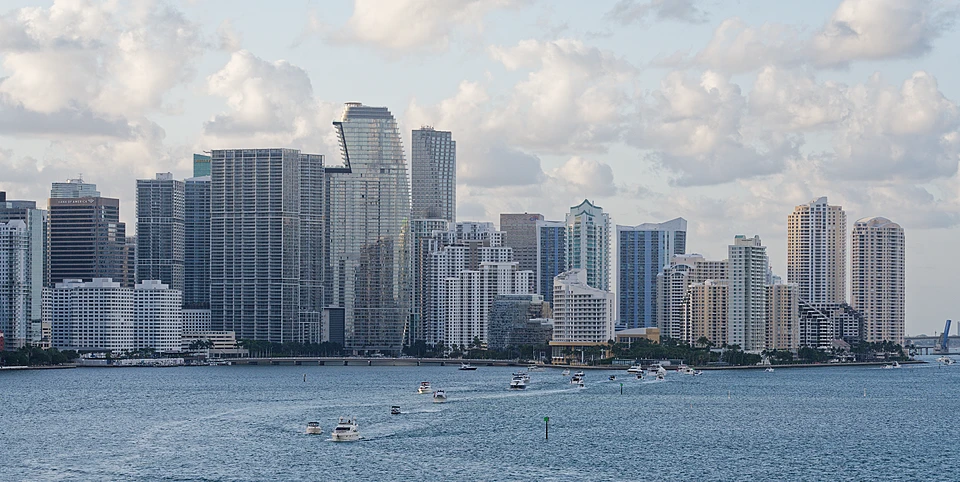
Floridians arrive here with a genuine head start. You already know what 90% humidity in September feels like, and if you live between Hialeah and Kendall you already order coffee in Spanish. The climate and the language transfer. The systems do not — and neither does the way you build a house.
The short answer
Get four things straight before you book a one-way flight. Choose a residency category and start the paperwork early, because apostilles are a Tallahassee errand and the queue at immigration is long. Budget for the Caja, which you are required to join once you are a resident. Keep filing in the United States, because citizenship, not address, decides that. And rent for a year before you buy land, through both the dry and the green season.
You do not need residency to buy a lot or to build on it — foreigners hold essentially the same property rights as citizens over titled land. Residency decides how long you can stay and whether you can work, not whether you can own. That separation matters, because the two timelines run in parallel: the immigration file takes about as long as a design-and-permit cycle, which is why we usually tell Floridians to start both in the same month.
Residency: choose the category first
You can enter as a tourist and stay up to 180 days at the officer's discretion. That is a visit. Legal residency runs through the Dirección General de Migración y Extranjería under immigration law 8764, and three categories cover nearly every American who moves here.
| Category | Financial test | What qualifies |
|---|---|---|
| Pensionado | ≈ $1,000 / month | A lifetime pension — Social Security, a defined-benefit plan, military retirement. It has to be permanent income, not drawdown from savings. |
| Rentista | ≈ $2,500 / month, or ≈ $60,000 deposited | Income guaranteed for two years by a bank, or the lump sum placed with an approved Costa Rican bank and drawn down monthly. Salary from a job does not qualify. |
| Inversionista | $150,000–$200,000 invested | Property, a registered business or qualifying forestry. The threshold was lowered to $150,000 under an investment-incentive window; confirm the figure in force on the day you file. |
All three are temporary categories. After three continuous years of legal residency you can generally apply for permanent residency, which drops the income test and opens the right to work freely.
The Florida-specific friction is documentary. Birth and marriage certificates and your FBI background check all need apostilles before they leave the United States — Florida documents through the Department of State in Tallahassee, the FBI check federally. Most supporting documents must also be under six months old when filed, so pulling them too early is as costly as pulling them too late. Start about six months out and expect the file itself to take considerably longer.
The Caja is not optional
This is the biggest structural difference from Florida. Once residency is approved, enrolment in the Caja Costarricense de Seguro Social is mandatory, and staying current is tied to renewing your DIMEX residency card. Contributions are a percentage of declared income rather than a premium you shop for, and a spouse and minor children are generally covered under the primary member's contribution.
What you get is universal coverage with no deductible, no network and no denial letters. What you trade is speed: non-urgent specialist referrals and elective surgery can mean long waits, while emergency care is immediate. Which is why most foreign residents who can afford it carry both — the Caja because it is required and catches catastrophes, plus private cover or straightforward cash payment at the private hospitals in and around San José.
Plan this one with a professional
Immigration categories, Caja rates and tax treatment are the three areas where internet figures go stale fastest and where being wrong is expensive. We build houses; we are not immigration lawyers or accountants. Confirm anything in this section with a licensed Costa Rican attorney and a cross-border accountant before you act on it.
US taxes follow you south
Moving does not end your filing obligation. The United States taxes citizens and permanent residents on worldwide income wherever they live, so the Form 1040 continues. Two mechanics matter most to people who move here:
- The Foreign Earned Income Exclusion can exclude a substantial amount of earned income if you meet the bona fide residence or physical presence test. It does not reach pensions, Social Security, dividends, rent or capital gains — which is precisely what most retirees live on.
- FBAR and FATCA reporting. If your foreign financial accounts together exceed $10,000 at any point in the year, you file an FBAR. It is an aggregate across all accounts, it is not indexed to inflation, and a rentista deposit crosses it immediately.
Costa Rica itself operates a largely territorial system, so foreign-source income has historically not been taxed locally, though reform proposals surface regularly. On the property side, expect the annual municipal property tax at roughly 0.25% of registered value, and check whether a higher-value home falls under the separate luxury-home tax. One Florida bonus: you are leaving a state with no income tax, so there is no state residency audit to disentangle on the way out.
What things actually cost
"Costa Rica is cheap" is half true, and the false half is where your money goes. Things grown or made here are inexpensive. Things imported — most consumer goods, and a meaningful share of building materials — carry duty, selective consumption tax and VAT that stack up quickly.
Cheaper than Florida
- Produce from the weekly feria.
- Labour, including skilled trades.
- Property tax, at roughly 0.25% of registered value.
- Healthcare, both public and private.
- Rent away from the beach towns.
More than Florida
- Cars — substantially, because of import duty.
- Appliances, electronics and imported finishes.
- Anything ordered online once forwarding and duty are added.
- Beachfront rent in the established resort towns.
- Specified imported materials on a build.
That last line is the one that surprises people mid-project. A finish schedule written from a Florida showroom can quietly add a large import premium to a house that would otherwise sit comfortably in its band. Our cost guide sets out the three construction bands per m² and the six site factors that decide where a project lands inside them, and What it costs an American to build a home in Costa Rica works the same numbers in dollars per square foot for readers coming from a US market.
Where Floridians settle
Three broad zones, and the choice shapes the house as much as the lifestyle.
The Central Valley
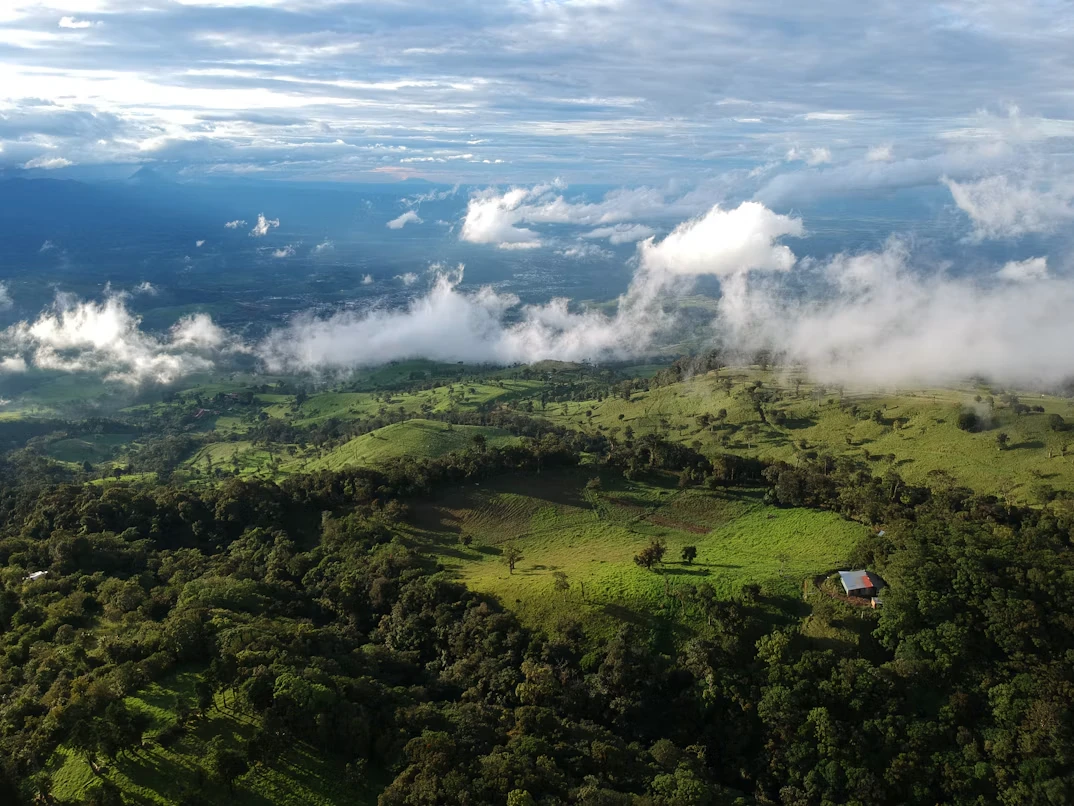
San José and the towns around it — Santa Ana, Escazú, Belén and Curridabat. Elevation buys something Florida cannot sell you: mild temperatures all year and, in much of it, no air-conditioning bill at all. The hospitals, the airport and the immigration offices are here. So is the traffic.
The Pacific coast
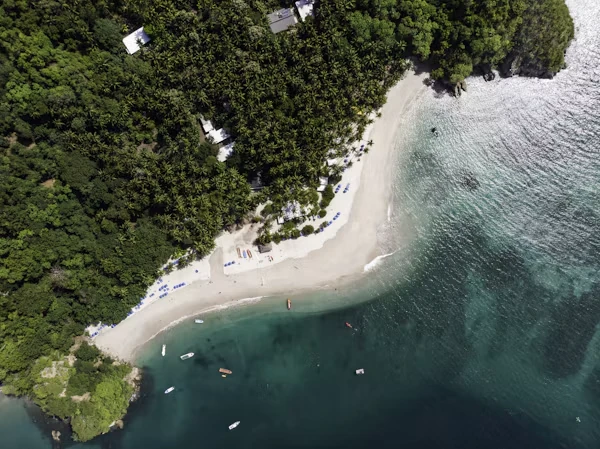
Santa Cruz, Carrillo and Península Papagayo in the dry north; Garabito on the central Pacific; Nicoya and Cóbano down the peninsula. Floridians almost always look here first. A good number move inland within a couple of years, for a reason that will sound familiar: year-round coastal heat and salt air, without the air-conditioning infrastructure they were used to.
The Caribbean side
Cheaper, wetter, more remote, Afro-Caribbean in culture. A smaller foreign community and a stronger local one. Not a soft landing, but the people who love it really do.
The best places in Costa Rica to build a family home compares the shortlist on schools, hospital drive times, heat and water, and our area guide covers permitting behaviour and ground conditions cantón by cantón.
And the language
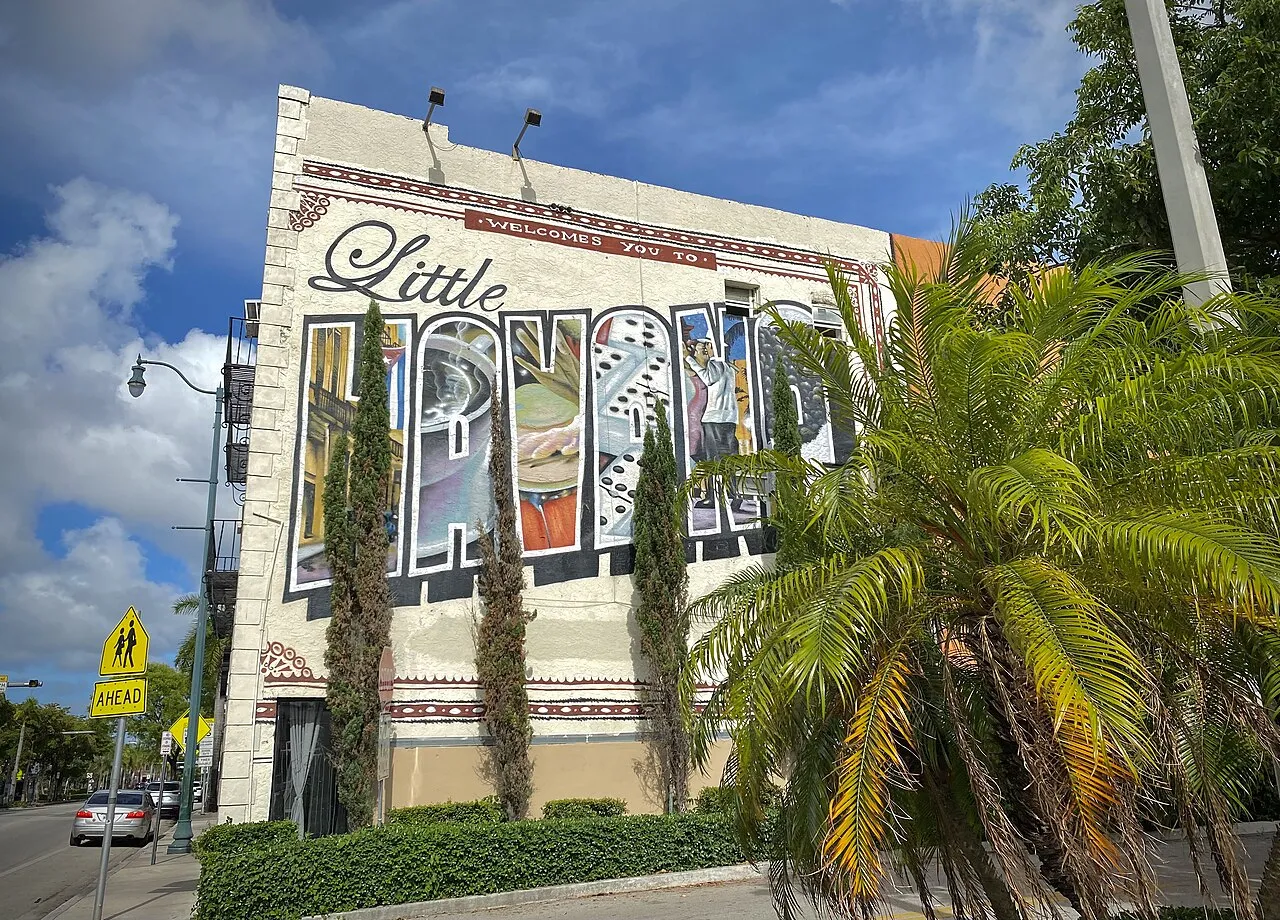
Escazú and the resort towns will let you coast in English, and coasting is what keeps people inside the foreign bubble for a decade. Florida Spanish is predominantly Cuban and Caribbean. Costa Rican Spanish is its own thing — slower, full of usted where you would expect tú, with vos between people who know each other. A Hialeah ear adjusts in about a month. It is also the single biggest factor in whether a building site goes well, because the crew, the municipality and the ASADA all work in Spanish.
What Florida taught you about houses, and what it did not
This is the part a relocation blog will not tell you, and it is the part we spend most of our time on with clients from Florida. You arrive with real, hard-won instincts about building in the subtropics. Some of them are exactly right here. Some of them are about the wrong hazard.
What transfers
Your instincts about humidity are correct and most newcomers' are not. You already know that cabinetry moves, that soft close hardware corrodes, that a closed-up house grows mould, and that ventilation is not a luxury item. You expect concrete block rather than timber framing, which is also the norm here. You take drainage seriously. All of that saves us a conversation.
What does not
Florida detailing is organised around one governing hazard: wind. The hurricane code drives the straps, the fastening schedules, the impact glazing and the roof uplift calculations, and a Florida architect's structural instincts are tuned to it.
Here the governing hazard is the earthquake. Structure is designed first to the seismic code CSCR-2010, which changes the reinforcement, the geometry and how the building is tied together — and it is enforced through the CFIA, where plans are stamped by a registered professional before a municipality will issue a permit. Rain comes second: sustained green-season rainfall is a different problem from a storm event, and it drives roof pitch, overhang depth, canoas and the detailing where the building meets the ground. Termites come third, and they are relentless.
The practical consequence: a set of Florida plans cannot simply be built here. It needs its structure re-engineered to CSCR-2010 and stamped through the CFIA, and usually its roof and ground-level details reworked. That is not a formality — it is a redesign, and it is cheaper to plan for it than to discover it. Our how we build page sets out the approach, and architecture & permitting covers the uso de suelo check, the CFIA visado and the municipal permit in sequence.
Two more Florida reflexes worth retiring
- Hurricane shutters are not the resilience item here. Costa Rica sits largely south of the main Atlantic hurricane track. The hazards that actually interrupt life are seismic, landslide and flooding in the green season. Spend the money on the geotechnical report and the retaining structure, not the shutters.
- The generator is not the first backup you need. On much of the Guanacaste coast and the Nicoya Peninsula, the binding constraint is water: the local ASADA can decline a new connection, and no water letter means no permit and no house. Confirm water before you make an offer on a lot — it is the single most common reason a site a client has already bought turns out to be unbuildable.
Cars, containers and pets
Sell the car
Import duty on vehicles is assessed on the government's valuation rather than on your bill of sale, and it is high enough that the same used 4×4 costs noticeably more here than in Florida. Sell before you leave, buy locally, and buy more ground clearance than you think you need.
Think hard about the container
Household goods shipped from Port Everglades or Miami reach Limón in a couple of weeks, but clear customs with duty assessed on declared value. Some residency categories have at times qualified for exemptions on household goods; whether that applies to you depends on current rules and your category. The common advice from people who have done it twice: bring what is irreplaceable, sell the rest, buy furniture here — and if you are building, let us specify the heavy items locally rather than shipping them into a duty calculation.
Pets are the easy part
Dogs and cats need a USDA-endorsed international health certificate issued shortly before travel, plus current rabies vaccination, and there is no quarantine. The real constraints are airline heat embargoes out of Florida in summer and breed restrictions, so book the flight around the animal.
A sensible two-year sequence
Almost every Floridian who lands well does roughly this, and almost every one who regrets it compressed it.
- Months 1–6, still in Florida. Choose a residency category. Pull and apostille documents in Tallahassee. Engage a Costa Rican attorney. Sell the car.
- Months 6–18, renting here. Live in the area you think you want, through both seasons. File the residency application. Learn the roads at school-run hours and in October rain.
- Months 12–18, in parallel. Look for land properly: title study, uso de suelo, the water letter, access and slope. How to buy a house in Costa Rica as a US citizen walks the purchase sequence, and an owner's representative can run the checks before you commit.
- Months 18–24. Design and permitting — the CFIA visado and the municipal permit run on their own clock, and this is the window where a Florida plan gets properly re-engineered.
- Then build. By which point residency, the lot and the design have each had the time they needed, rather than all three competing for the same panicked quarter.
If you remember five things
- Pick a residency category early; apostilles happen in Tallahassee, and the queue is long.
- The Caja is mandatory once you are a resident, and most people carry private cover alongside it.
- You keep filing in the United States, and the FBAR threshold is lower than you think.
- You can buy and build without residency — the two timelines run in parallel.
- Your Florida plans need re-engineering: earthquakes first, then rain, then termites.
Keep reading
- What it costs an American to build a home in Costa RicaPer-square-foot bands, permits, taxes and the currency risk
- How to buy a house in Costa Rica as a US citizenTitle checks, escrow, closing costs and the maritime zone
- The best places in Costa Rica to build a family homeSchools, hospitals, heat and water, place by place
- How we buildSeismic first, then rain, then termites
- Where we buildNine cantones, with permitting and ground conditions for each
- Architecture & permittingUso de suelo, CFIA plans, municipal permits and SETENA
Answered
What Floridians ask us most.
Do I need residency to buy land or build a house in Costa Rica?
No. Foreigners hold essentially the same property rights as citizens over titled land, whether or not they are residents, and a tourist can buy a lot and commission a house. Residency governs how long you may stay, whether you may work, and your access to the public health system — not whether you may own. The exception is the maritime zone, the 200 metres inland from the high-tide line, which is concession land with its own restrictions.
How long can I stay in Costa Rica as a tourist?
Up to 180 days at the immigration officer’s discretion, and the length of the stamp is not guaranteed. Tourist status carries no right to work and no access to the Caja. It is a reasonable way to spend a trial year while you rent, but it is not a substitute for residency if you intend to settle.
What does the Caja cost for a resident from the United States?
Contributions are set as a percentage of declared income rather than a flat premium, so the figure varies with what you declare and with the category you enrol under. Published guidance from relocation and insurance advisers generally puts a retired couple somewhere in the low hundreds of dollars a month, with a spouse and minor children usually covered under the primary member’s contribution. Confirm your own figure with the CCSS, because the rate schedule changes.
Will I still file a US tax return if I live in Costa Rica?
Yes. The United States taxes citizens and permanent residents on worldwide income regardless of where they live, so a Form 1040 continues for as long as you hold the passport. The Foreign Earned Income Exclusion applies to earned income only, not to pensions, Social Security, dividends or rent. Separately, if your foreign accounts together exceed $10,000 at any point in the year you must file an FBAR — a threshold that is easy to cross the moment you fund a Costa Rican account for a rentista deposit.
Does Medicare cover me in Costa Rica?
Generally no. Medicare does not pay for care received outside the United States. That is why residents rely on the Caja, which they are required to join, usually alongside a private policy or straightforward cash payment at the private hospitals.
Should I ship my car from Florida?
Usually not. Import duty on vehicles is assessed on the government’s own valuation rather than on your bill of sale, and it is high enough that the same used truck costs noticeably more here than in Florida. Most people sell before they leave and buy locally, choosing more ground clearance than they think they need.
Is building in Costa Rica like building in Florida?
The materials rhyme — concrete block is normal in both — but the governing hazard is different. Florida detailing is driven by wind uplift and the hurricane code. Costa Rican structure is designed first for earthquakes under the seismic code CSCR-2010, then for sustained rain, then for termites. A design imported unchanged from Florida will usually need its structure re-engineered here, and the roof, overhangs and ground-level details reworked.
Sources & further reading
Construction practice in this article is from our own work. Immigration, health and tax figures are from the official bodies below and from published advisory guidance; they change, sometimes at short notice, so verify before acting.
- Dirección General de Migración y Extranjería Residency categories, requirements and filing procedure under law 8764.
- Caja Costarricense de Seguro Social Mandatory enrolment, contribution rates and the public health system.
- IRS — US citizens and resident aliens abroad Worldwide-income filing, the Foreign Earned Income Exclusion and FBAR reporting.
- U.S. Embassy in Costa Rica Country information and services for US citizens living here.
- Colegio Federado de Ingenieros y de Arquitectos (CFIA) Professional registration and the visado that precedes a municipal permit.
- Wikimedia Commons Miami and Little Havana photography, used under its Creative Commons licence.
- Unsplash Costa Rican coast and Central Valley photography, used under the Unsplash licence.
This article is general planning information, not legal, immigration or tax advice. Residency thresholds, Caja rates and tax treatment change; confirm current figures with the relevant authority and a licensed professional before you rely on them.
Coming from Florida
Send us your Florida plans. We'll tell you what has to change.
Most sets need the structure re-engineered to CSCR-2010 and the roof and ground details reworked before the CFIA will stamp them. Send what you have, with the lot location, and we'll come back with what it takes to build it here.
Replies within one business day. Consultations in English or Spanish.