Ownership guide · 2026 · Land & title · Permits & law · Moving & residency
Can Americans own property in Costa Rica?
Yes — in your own name, with no residency and no local partner. Costa Rica is one of the few countries in the region where that sentence needs no asterisk for ordinary titled land. The asterisks that do exist are about which land, not about who you are, and they are concentrated in the 200 metres closest to the sea.
The short answer
Americans — and foreigners generally — can buy, hold and sell titled Costa Rican property on the same terms as Costa Rican citizens. Ownership is registered in your own name at the national property registry, it is not conditional on residency, and it does not expire or convert into anything else over time. Most of the horror stories circulating in expat forums are not about nationality at all; they are about buying something that was never titled property in the first place.
Four things are worth knowing before you shortlist a lot:
- Titled land is open to you. Registered fee-simple property, inland or with an ocean view, carries no foreign-ownership restriction whatsoever.
- The beach is different. The maritime terrestrial zone is state land. It is leased by concession, not sold, and the concession rules do restrict foreigners.
- Not everything for sale is titled. Possession rights and farms with mismatched surveys are sold daily to buyers who believe they are getting a deed.
- Holding costs are low but not zero. Property tax, possibly the luxury-home tax, and a company's annual obligations if you use one.
What this article is, and is not
We are a builder, not a law firm. What follows is the framework we work inside every week, written so you can ask your own attorney sharper questions. Titles, taxes and concessions all turn on facts specific to one finca, and rates and thresholds change — have a Costa Rican attorney and tax adviser confirm the current position before you sign anything. The transaction itself is covered step by step in How to buy a house in Costa Rica as a US citizen.
What the law actually says
Article 19 of the Constitution is the whole foundation: foreigners have the same individual rights and duties as Costa Ricans, with only the exceptions the Constitution and the law establish. Property is not one of those exceptions. There is no nationality test in the property registry, no requirement for a Costa Rican shareholder, no cap on how much land a foreigner may hold, and no approval process to clear before buying.
That is unusually clean by regional standards, and it is deliberate: foreign investment in real estate has been part of the country's economic model for decades. The flip side is that the country does not protect you from a bad purchase either. Equal treatment means equal responsibility for your own due diligence.
Titled property: what you actually get
Costa Rica runs a public, searchable property registry. Each titled parcel has a folio real number, and against that number sit the owner, the registered area, the recorded liens, mortgages, easements and annotations. The parcel's physical shape and boundaries come from a surveyed plan — the plano catastrado — registered with the cadastre.
Ownership transfers by a deed executed before a Costa Rican notary, who is also a lawyer, and is then presented for registration. Until that registration completes you are not yet the registered owner, which is why closing and registration are two different dates and why your attorney's title study matters more than the seller's reassurance.
What to read before you commit
- The folio real — owner, area, liens, annotations.
- The plano catastrado — and whether it matches the ground.
- Uso de suelo from the municipality — what may be built.
- Water: a water availability letter from the ASADA or AyA.
- Access: a registered public road frontage or a registered easement.
What catches buyers out
- Registered area and surveyed area that do not agree.
- An easement across the only buildable part of the lot.
- Setbacks from a river or stream that erase the view terrace.
- A corporate seller whose legal representative cannot actually sign.
- No water letter — the most common reason a lot cannot be built on.
The four real restrictions
Rather than a nationality rule, Costa Rica has categories of land. Knowing which one a listing belongs to answers most ownership questions immediately.
Titled property (propiedad inscrita)
- What it is: Full ownership, registered under a folio real at the Registro Inmobiliario.
- For a foreigner: Open to foreigners on identical terms to nationals.
- Building on it: Normal permitting route: uso de suelo, CFIA visado, municipal permit.
Maritime-zone concession (zona restringida)
- What it is: A time-limited lease of state land from the municipality, not ownership.
- For a foreigner: Restricted: Law 6043 limits concessions to foreigners and foreign-held companies.
- Building on it: Only within an approved regulatory plan, with municipal and ICT involvement.
Possession right (derecho de posesión)
- What it is: Occupation without registered title — a claim, not a registered right.
- For a foreigner: No nationality rule, but no registry protection either.
- Building on it: Expect permitting and financing problems until it is titled.
Indigenous territory
- What it is: Communal land held by the indigenous community under Law 6172.
- For a foreigner: Cannot be owned by non-indigenous people, Costa Rican or foreign.
- Building on it: Not available for private purchase or development.
A fifth category is worth a sentence: land inside national parks, protected areas and certain border and island areas is state land or heavily conditioned, whoever is buying. If a price looks impossible for the location, the category is usually the reason.
Beachfront, and what a concession really is
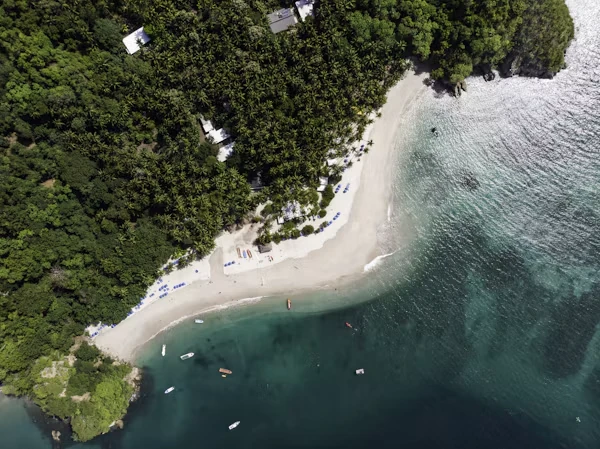
Law 6043 of 1977 defines the maritime terrestrial zone: the 200 metres measured inland from the mean high tide line, along the whole coast. It splits in two.
- The first 50 metres — public zone. Public by definition. Nobody owns it, nobody may build a private house on it, and the beach in front of any development stays public.
- The next 150 metres — restricted zone. State land the municipality may lease by concession, for a fixed term, where an approved regulatory plan (plan regulador) exists. A concession is a lease with conditions and a renewal process, not a deed.
This is where the only significant foreign-ownership restriction in the country lives. Law 6043 bars a concession to a foreigner who has not been resident in Costa Rica for at least five years, and to companies whose shares are majority foreign-held. Structures that attempt to dress up foreign control of a concession as local ownership are a long-standing enforcement target, and we would not build on one.
How this goes wrong in practice
Maritime-zone concession rights get marketed to foreign buyers as "beachfront property" with photographs of a deed-shaped document. Ask one question early and in writing: is this a registered finca with a folio real, or a municipal concession? If it is a concession, your attorney needs to review the term, the renewal history, the regulatory plan, the municipality's standing and the nationality rule before anything else is discussed.
None of this makes coastal building off-limits. A great deal of the coast — including most of what we build on in Guanacaste and the South Pacific — sits outside the 200 metre strip as ordinary titled land with an ocean view. See The best places in Costa Rica to build a family home for how those locations compare on the things that actually shape daily life.
Untitled land and possession rights
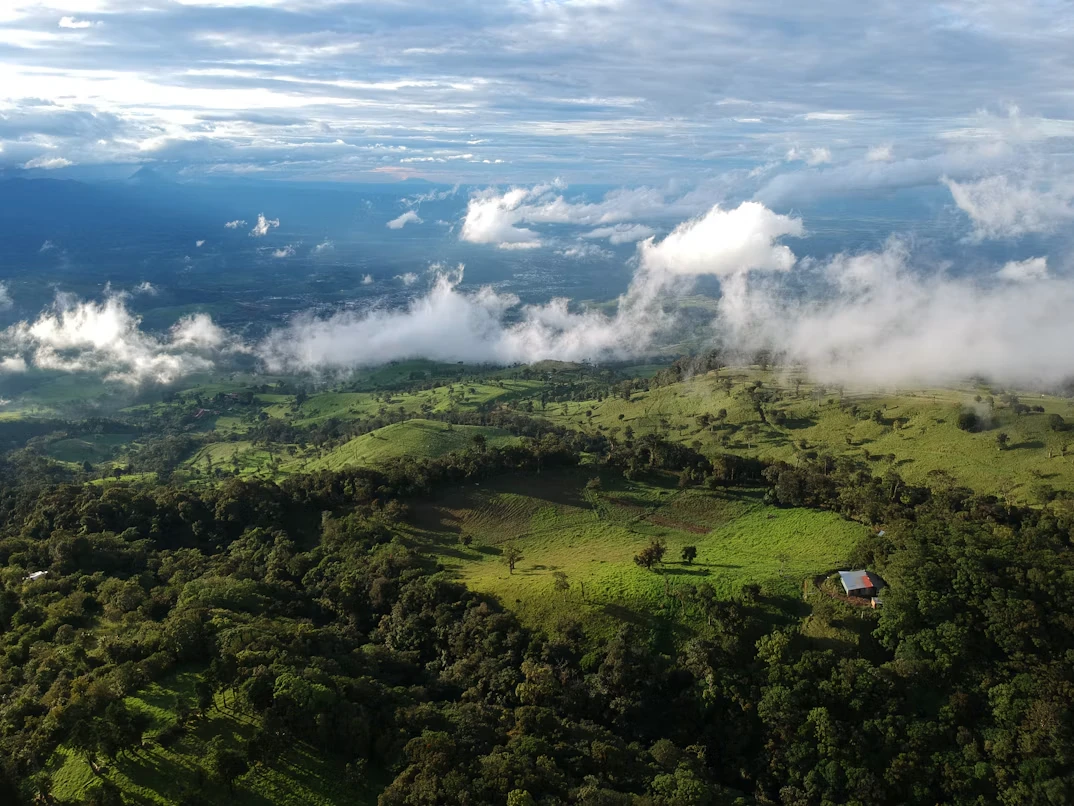
Some Costa Rican land has never been through the titling process. What is sold in those cases is a derecho de posesión — a possession right based on occupation and use rather than a registered deed. It can be perfectly genuine, it is often cheap, and it is not ownership.
Possession can in principle be converted to registered title through the statutory information posesoria procedure, but it is a court process with requirements and no guaranteed outcome or timeline. Meanwhile a possession right is hard to mortgage, hard to insure, harder to permit a build on, and genuinely difficult to resell to the next careful buyer.
Our advice is simple and rarely popular: unless you have an attorney who has titled this specific class of parcel before and is willing to put a timeline in writing, buy registered property. The discount on untitled land is not a bargain, it is a price for risk you then own.
Own name, or a Costa Rican company?
Both routes are completely normal here, and the honest answer is that it depends on facts about you, not about Costa Rica.
In your own name
- Simplest and cheapest to maintain — no corporate filings.
- What the inversionista residency route expects to see.
- Cleanest for a single owner or a married couple.
- Succession runs through a Costa Rican estate process.
Through an S.A. or S.R.L.
- Easier to hold with partners, or to pass on by transferring shares.
- Some liability separation between the asset and you personally.
- Costs: annual corporate tax, inactive-company filing, beneficial-ownership declaration, legal books, an accountant.
- US tax reporting for a foreign entity can be significant — ask first.
Two warnings from the field. First, buying the seller's existing company to "save the transfer tax" also buys its entire history — debts, lawsuits, unfiled returns — so the saving is rarely worth it without a full corporate audit. Second, deciding this after closing means transferring the property again, with another round of transfer tax and fees. Decide before the deed.
Powers of attorney
Buyers who cannot be in the country sign a power of attorney so counsel can act for them. Keep it narrow: this transaction, this parcel, these acts, with an expiry. A broad general power is a convenience that occasionally becomes an expensive problem. This is one of the clauses we always suggest having reviewed by a lawyer who is not the one who drafted it.
What ownership costs you every year
Holding costs here are low by US standards, which is part of the appeal. They are not zero, and two of them surprise people.
- Property tax — 0.25% of registered value, collected by the municipality, typically quarterly. On a declared value of $400,000 that is about $1,000 a year.
- Luxury home tax (impuesto solidario). Where the construction value exceeds the annually adjusted threshold — roughly ₡143 million for 2026 — a sliding-scale tax applies to the total property value. It is a construction-value test, so a modest house on expensive land can fall outside it while an expensive house on a cheap lot does not.
- Corporate obligations, if you use a company. The annual corporate tax, an inactive-company return, the beneficial-ownership registry declaration and an accountant to keep it all filed.
- Rental income. Taxable in Costa Rica if you let the house, with registration and filing obligations that come with it.
- Capital gains on sale. The 2019 tax reform introduced a 15% capital gains regime on property transfers, with exemptions and transitional rules — including for a habitual residence — that need checking against your own facts.
Budget these alongside the build, not after it. Our cost guide covers construction cost per m²; What it costs an American to build a home in Costa Rica sets the whole-project number against taxes, permits and the currency question.
Ownership is not residency
This is the single most common misunderstanding we hear. Buying property does not grant you the right to live in Costa Rica. Tourist entry rules apply to you exactly as they did before you owned a house, and the border is not obliged to care that you have one.
Residency is its own process, with the pensionado, rentista and inversionista categories as the usual routes for Americans. Property can support the inversionista application where the investment meets the threshold, but the application is still an immigration process with its own requirements, including enrolment in the Caja. Moving from Florida to Costa Rica walks through that side of it in detail.
Inheritance and succession
Costa Rica has no inheritance or estate tax, which is good news. What it does have is a judicial succession process that your heirs will have to run here, in Spanish, with local counsel. A US will can be recognised but needs validating through the courts, which is slower and costlier than people assume.
The usual answers are a Costa Rican will drawn alongside your US estate plan, holding the property in a company so that shares transfer instead of real estate, or a trust structure. All three need to be set up with coordinated advice on both sides — a clean Costa Rican structure can create an ugly US filing position and vice versa.
The US side of it
Owning foreign real estate directly does not, by itself, create a US reporting obligation for the property. What does create obligations is everything around it: foreign bank accounts opened to run the project, rental income, holding the property inside a foreign company, and the eventual sale. US citizens are taxed on worldwide income wherever they live.
We are builders, not tax advisers, and we will not pretend otherwise. Get a US CPA with expatriate experience involved before you choose the ownership structure, not in April of the following year. The cost of that conversation is trivial against the cost of unwinding the wrong structure.
Owning the lot, then building on it
Once title is registered in your name or your company's, the building process is the same one a Costa Rican owner goes through — there is no separate, slower track for foreign owners.
- Uso de suelo. The municipality confirms what the zoning allows on that parcel before any design work is worth paying for.
- Design, stamped and visaed. Drawings produced by CFIA-registered professionals and visaed through the CFIA platform — see architecture and permitting.
- Municipal construction permit, plus SETENA environmental review where the site or the scale triggers it.
- Build under supervision. A registered professional is responsible for the works; general contracting and project management cover how we run that.
- Someone on your side while you are abroad. Most of our overseas owners use an owner's representative precisely because they are not here every week.
If you remember five things
- Foreigners own titled Costa Rican property on identical terms to nationals, in their own name, without residency.
- The 200-metre maritime zone is the real exception: public zone plus concession land, with a genuine foreign restriction.
- Ask whether a listing is a registered finca or a possession right before you discuss price.
- Choose own-name versus company before the deed, with Costa Rican and US advice in the same conversation.
- Owning a house is not residency, and it never becomes residency on its own.
Keep reading
- How to buy a house in Costa Rica as a US citizenThe transaction itself: offer, escrow, title study, closing
- What it costs an American to build a home in Costa RicaWhole-project costs, permits, taxes and currency
- Moving from Florida to Costa RicaResidency, the Caja, taxes and landing here
- The best places in Costa Rica to build a family homeWhere families actually build, compared
- Where we buildNine cantones, and how permitting behaves in each
- Building in Costa Rica, answeredPermitting, ownership, timelines and methods
Answered
What American buyers ask about owning here.
Can Americans own property in Costa Rica?
Yes. Article 19 of the Costa Rican Constitution gives foreigners the same individual rights and duties as nationals, and property ownership is one of them. An American can hold fully titled land and buildings in their own name, registered at the Registro Inmobiliario, with the same protection a Costa Rican has. There is no foreign-ownership quota, no local-partner requirement and no restriction on selling later or on taking the proceeds out of the country.
Do I need residency or citizenship to own property in Costa Rica?
No. Ownership and immigration status are separate systems. You can buy, hold and sell titled property while visiting as a tourist, and you never need to become a resident to keep it. What tourist status does not give you is the right to live here permanently or to work — and buying a house does not change that. The only connection runs the other way: the inversionista residency category can be based on a qualifying investment of at least $150,000, which may include real estate held in your personal name.
Can a foreigner own beachfront property in Costa Rica?
Sometimes, and the distinction matters. The first 200 metres inland from the mean high tide line is the maritime terrestrial zone under Law 6043: the first 50 metres is public zone where nothing can be owned or built, and the next 150 metres is restricted zone that municipalities lease by concession rather than sell. Law 6043 limits those concessions for foreigners — a foreigner with fewer than five years of residence, or a company whose shares are more than half foreign-held, cannot hold one outright. Outside that 200-metre strip, ocean-view and ocean-adjacent land is ordinary titled property that any foreigner can buy. Plenty of genuinely titled coastal land exists; the error is assuming any given beachfront lot is one of them.
Should I buy Costa Rican property in my own name or through a corporation?
Both are normal and neither is automatically right. Personal ownership is simpler and cheaper to maintain, and it is what the inversionista residency route expects. A Costa Rican S.A. or S.R.L. can make liability separation, multiple owners, succession and a later sale of shares easier, but it brings the annual corporate tax, an inactive-company tax filing, the beneficial-ownership registry declaration, legal books and an accountant. Since the 2019 tax reform the old "no-tax shell company" logic no longer holds. Decide it with a Costa Rican attorney and a US tax adviser together, before closing, because changing your mind later means a second transfer and a second set of transfer taxes.
What taxes does a foreign owner pay each year?
Municipal property tax is 0.25% of the registered value, usually payable quarterly. Above a construction-value threshold — roughly ₡143 million for 2026 — the solidarity tax on idle luxury homes (impuesto solidario) applies on a sliding scale. A company that owns the property also pays the annual corporate tax. If you rent the house out, rental income is taxable in Costa Rica. On sale, the 15% capital gains regime introduced by the 2019 tax reform generally applies, with specific exemptions and transitional rules. Confirm current rates and thresholds with a Costa Rican tax professional; these are the figures to budget around, not a tax opinion.
Is buying property in Costa Rica safe for an American?
The registry system is good and the legal framework is genuinely non-discriminatory. The risk is concentrated in due diligence rather than in nationality: untitled land sold as if titled, surveys (planos catastrados) that do not match the fence line, undisclosed liens or easements, maritime-zone land sold as fee simple, and powers of attorney signed too broadly. Every one of those is found by a competent independent attorney doing a title study before money moves. Our companion article on buying a house walks the transaction itself step by step.
Can someone squat on my land and take it?
Registered titled property that is actively used, enclosed and watched is not realistically lost to occupation. The exposure sits with untitled land and with titled land left unattended for years: Costa Rica does have a mechanism for turning long-term possession into title, and removing occupiers is a slow judicial process. Practical defence is unglamorous and effective — a registered survey, a fenced and marked boundary, a caretaker, and someone local who actually visits. We build perimeter work as its own scope for exactly this reason.
What happens to my Costa Rican property when I die?
It passes through a Costa Rican succession process. A foreign will can be recognised but has to be validated here, which is slow and expensive; many owners instead make a Costa Rican will, or hold the property in a company so that shares rather than real estate change hands, or use a trust. Costa Rica has no inheritance or estate tax of its own, but the process takes time and your heirs will need local counsel. This is one of the few genuinely good reasons to think hard about the ownership structure at purchase rather than later.
Can Americans get a mortgage to buy property in Costa Rica?
Rarely on US terms. Costa Rican banks do lend to foreigners, but generally expect residency, local income or credit history and a large down payment, at higher rates and shorter terms than an American would expect. Most of our clients pay cash, borrow against assets at home, or negotiate seller financing secured by a mortgage registered against the property here.
Sources & further reading
The primary legal and institutional sources behind this article are listed below. Rates, thresholds and regulations change, and the answer for any specific parcel depends on its own registry and municipal record — confirm the current position with a Costa Rican attorney and tax professional before you act.
- Registro Nacional — Registro Inmobiliario The public property registry: folio real records, liens, annotations and the cadastre.
- SCIJ — Sistema Costarricense de Información Jurídica Official text of the Constitution, Law 6043 (maritime terrestrial zone), Law 6172 (indigenous law) and the property tax law 7509.
- Ministerio de Hacienda Transfer tax, the solidarity tax on luxury homes, capital gains and corporate filing obligations.
- Dirección General de Migración y Extranjería Residency categories, including the investor route and its investment threshold.
- Colegio Federado de Ingenieros y de Arquitectos (CFIA) Professional registration and the visado that precedes any municipal construction permit.
- IRS — International taxpayers US reporting obligations that follow citizens abroad, including foreign entities and accounts.
General guidance for planning, not legal or tax advice. Title, concession status, corporate structure and taxation must be verified for your specific property by a Costa Rican attorney, with US tax advice taken in parallel.
Bought the lot, or about to?
Send us the plano and we'll tell you what can actually be built on it.
Setbacks, access, water, slope and zoning decide a house long before taste does. Share the folio real or the surveyed plan and we'll come back with the buildable envelope and an honest cost range.
Replies within one business day. Consultations in English or Spanish.